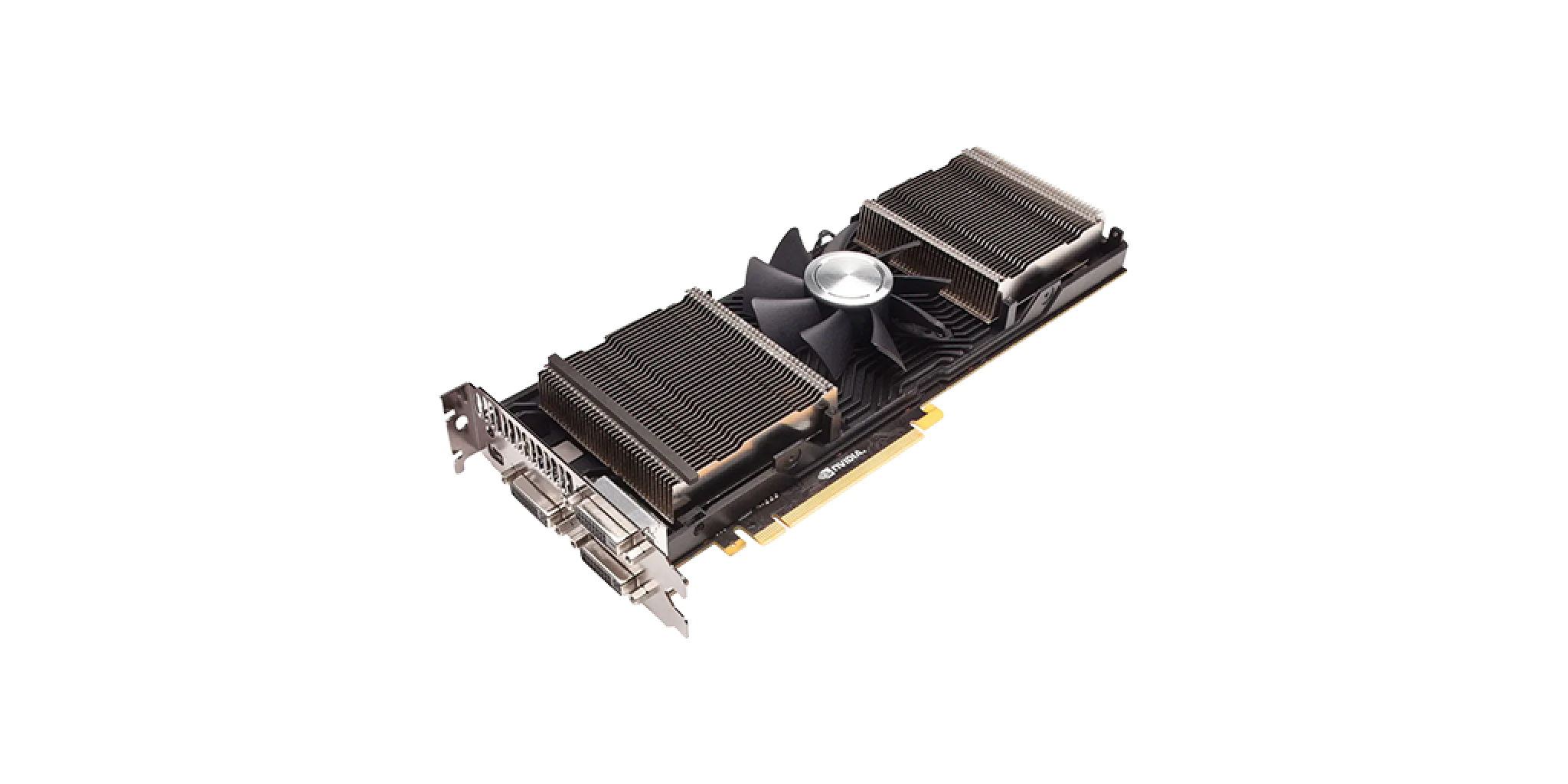
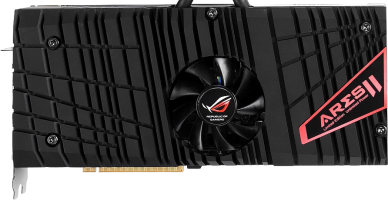
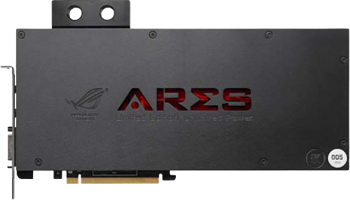
For roughly a decade, from the mid-2000s to the mid-2010s, the fastest graphics card you could buy often wasn't a single GPU at all. Both NVIDIA and AMD regularly took their flagship chip, put two of them on one board, and sold the result as the ultimate halo product. Cards like the GeForce GTX 690 and Radeon R9 295X2 were engineering showpieces: huge, power-hungry, expensive, and capable of performance no single chip could match at the time. Today the format is essentially extinct in gaming, but the idea behind it never really went away.
How it works
A dual-GPU card is essentially two complete graphics cards sharing one circuit board. Each GPU has its own memory and power delivery. A PCIe switch chip on the board splits the slot's connection between the two GPUs, and a link between them does the same job as an external SLI or CrossFire bridge.
To the computer, it's not one big GPU. The system sees two separate GPUs, and the driver has to split the work between them. The most common method was Alternate Frame Rendering (AFR), where GPU one draws frame 1, GPU two draws frame 2, and so on. When it worked, frame rates could approach double those of a single GPU. When it didn't, the second GPU sat idle.
The catches
- Memory doesn't add up. Each GPU needs its own copy of the textures and scene data, so the memory is mirrored, not pooled. A card advertised with 8 GB (like the R9 295X2) effectively behaves like a 4 GB card. Marketing usually quoted the total anyway.
- Microstutter. AFR can deliver frames at uneven intervals. A game might report 60 fps but feel less smooth than a steady 45 fps on a single GPU. This became a major topic in reviews around 2012–2013 once frame-time testing became common.
- Driver dependency. Scaling depended on game-specific SLI/CrossFire profiles. New games often launched without support, and some never got it.
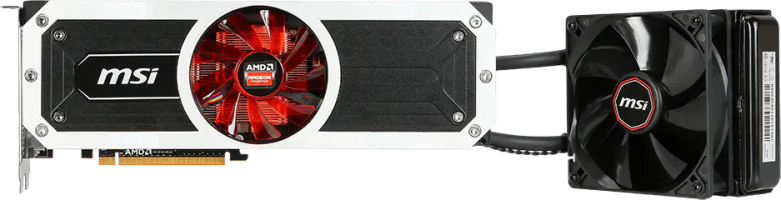
- Heat and power. Two flagship chips on one board meant extreme cooling demands. The R9 295X2 shipped with a factory liquid cooler and a rated board power around 500 W.
NVIDIA
NVIDIA GeForce 7950 GX2
2006 | 2 x G71 | 2 x 512 MB | GDDR3
NVIDIA GeForce 9800 GX2
2008 | 2 x G92 | 2 x 512 MB | GDDR3
NVIDIA GTX 295
2009 | 2 x GT200B | 2 x 896 MB | GDDR3
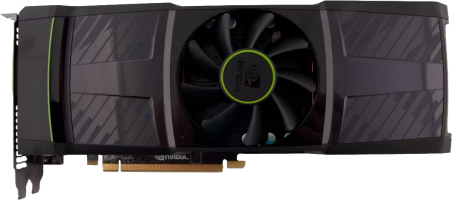
NVIDIA GTX 590
2011 | 2 x GF110 | 2 x 1.5 GB | GDDR5
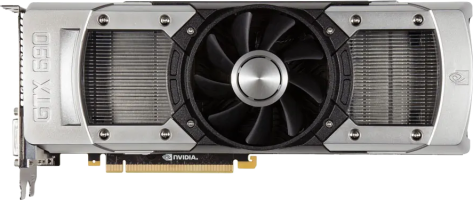
NVIDIA GTX 690
2012 | 2 x GK104 | 2 x 2 GB | GDDR5
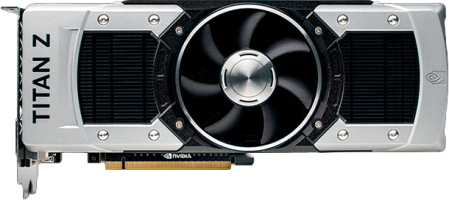
NVIDIA GTX TITAN Z
2014 | 2 x GK110B | 2 x 6 GB | GDDR5
AMD
AMD Radeon HD 3870 X2
2008 | 2 x R680 | 2 x 512 MB | GDDR3
AMD Radeon HD 4850 X2
2008 | 2 x R700 | 2 x 512 MB | GDDR3
AMD Radeon HD 4870 X2
2008 | 2 x R700 | 2 x 1024 MB | GDDR5
AMD Radeon HD 5970
2009 | 2 x Hemlock | 2 x 1024 MB | GDDR5
AMD Radeon HD 6990
2011 | 2 x Antilles | 2 x 2 GB | GDDR5
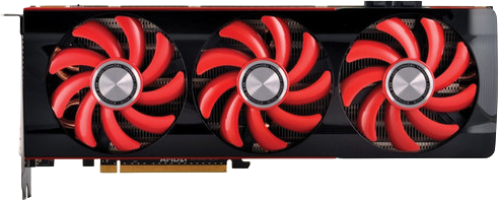
AMD Radeon HD 7990
2013 | 2 x Malta | 2 x 3 GB | GDDR5
AMD Radeon R9 295X2
2014 | 2 x Vesuvius | 2 x 4 GB | GDDR5
AMD Pro
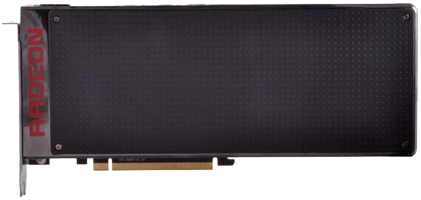
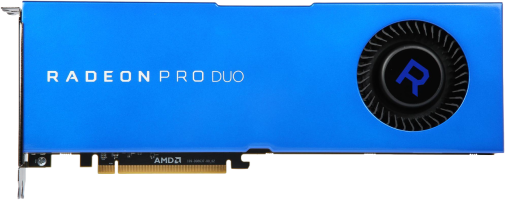
AMD Radeon PRO Duo
2016 | 2 x Capsaicin | 2 x 4 GB | HBM
AMD Radeon PRO Duo Polaris
2017 | 2 x Ellesmere | 2 x 16 GB | GDDR5
Asus ROG Mars and ROG Ares
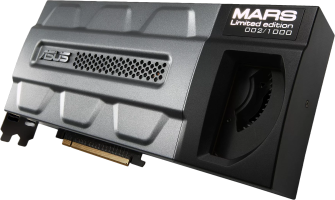
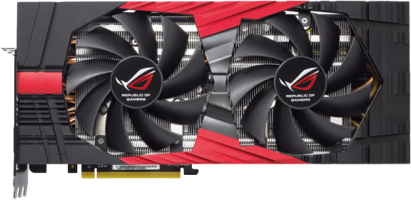
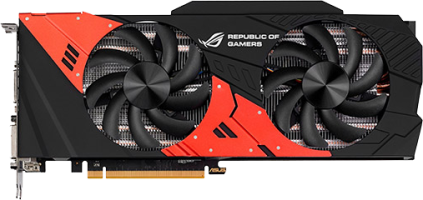
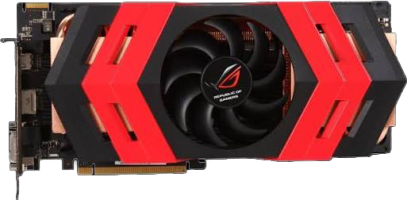
Asus's Republic of Gamers division took the concept even further with limited-edition cards that NVIDIA and AMD never made themselves. They often used full-spec chips where the official dual-GPU card was cut down, along with more memory and higher clocks.
Asus ROG Mars GTX 285
MARS/2DI/4GD3
Asus ROG Mars GTX 580
MARS-II/2DIS/3GD5
Asus ROG Mars GTX 760
MARS760-4GD5
Asus ROG Ares
ARES/2DIS/4GD5
Asus ROG Ares II
ARES2-6GD5
Asus ROG Ares III
ARESIII-8GD5
These were produced in small numbers, often around 1,000 units or fewer, and are now collector's items.
Why they disappeared
Several trends ended the dual-GPU card:
- Single GPUs got big enough. As flagship chips grew, one GPU could deliver what used to take two, without the scaling problems.
- Game engines moved away from AFR. Modern rendering techniques reuse data from previous frames (temporal anti-aliasing, for example), which conflicts with having two GPUs each render alternate frames.
- DirectX 12 and Vulkan shifted responsibility. Under the new APIs, multi-GPU support became something each game developer had to build in themselves, rather than something the driver handled. Very few did.
- The vendors stepped back. NVIDIA stopped adding new SLI profiles from 2021 and limited SLI to its top cards before dropping it entirely. AMD quietly de-emphasized CrossFire around the same time.
The last gaming dual-GPU cards were the GTX Titan Z and R9 295X2 in 2014. In the professional market, Apple's Mac Pro kept the format alive a little longer with the Radeon Pro Vega II Duo and W6800X Duo.
Conclusion
The basic idea of combining several pieces of silicon to go beyond what one chip can do has come back in the datacenter. The difference is that modern designs connect the dies so closely and with so much bandwidth that software sees one GPU. NVIDIA's Blackwell (B200) and Rubin accelerators put two large dies in one package. AMD's Instinct MI300 and MI400 series go further, with many compute chiplets in each package. In a sense, the dual-GPU card was a first attempt at what chiplets do properly today.
The creator and owner of GPUs.net has a history with GPUs reaching back to the 90's, starting with a Pentium II 400MHz and a Voodoo 2 graphics card. That early hands-on curiosity carried through the years, and in 2017 he began building and configuring his own dedicated systems — gradually scaling from a home setup to a larger multi-GPU operation, gaining deep technical knowledge of hardware management, power delivery, thermals, and system stability along the way.